Monday, April 25, 2011

"PLANTS, PLANTS PLANTS!"

Well, here they are. A handful of what I saw, just a taste of the amazing botanical diversity of Nicaragua.


Jicaro (Crescentia cujeta) has a strange flower pollenated by bats, it actually looks like a bat. It produces large hard round fruits that contain numerous protein rich seeds that are made into a drink. This one is growing in Arboretum Nacional Juan Bautista Salas Estrada in Managua.


The national arboretum a center for education in the capital grows many useful plants of Nicaragua. Common Bamboo (Bambus vulgaris), though not native is grown extensively for construction material. It ain't bad looking either.


We went to Chocoyero Canyon National Reserve outside of Managua mostly to see the flocks of green parakeets, toucans and yellow headed amazon parrots, but we had a lot of botanical surprises along the way. Like this Philodendron goeldii.


The very large buds on a vine I never found the name of.


Along with the creepy knowledge that vampire bats inhabit this canyon, luckily we visited after dawn, was this floral oddity, a Dutchman's pipe of some sort ( Aristolochia sp. ).


Our destination was Paradise and that was Little Corn Island on the Caribbean side of the country.This little island inhabited for a long time was forested with plants from around the world. Mostly fruit producing like bananas (Musa acuminata). The whole island felt more like a garden than a jungle, though jungley it was.


It rained daily while we were there. Plenty of mushrooms erupted from logs, piles of manure and the ground. We didn't eat any. But I had to get a picture of this odd fuzzy one. The photo is a little fuzzy, too.


Breadfruit (Artocarpus altilis) another tree brought to the island by man made up a large portion of the jungle canopy.


Hoja de estrella, or root beer plant, (Piper auritum) is native to the island though I only encountered it in gardens. The leaves smell like root beer and the locals make a tea from the leaves to aid digestion; they are also used to flavor meats and tamales, though modern research says it could lead to liver cancer.


Mangoes (Mangifera indica) were the dominant tree on the center of the island, coconut palms dominated the beaches. Both are from South East Asia, though they look right at home. While we were there the mangos put out their new spring growth, which was a beautiful bronzy plum pink.


Ah, my beloved pineapple (Ananas comosus). There is noting like this bromeliad. It is said to be native to Brazil, but to date there are no wild populations found. It has been cultivated so long and has settled in on Little corn Island so that it seemed quite natural to see them popping out of a clearing in the jungle in glorious technicolor.


Syngonium angustatum grew prolifically on the island, climbing palms, mangoes and anything else it could get a hold of. It grows throughout Central America. The red fruit are eye catching but inedible.


This sweet little fern covered the volcanic rock on the north side of the island. Wherever I travel ferns are the one thing that make me feel at home.


I wonder if these islanders realized that they painted their house the color of the Senna alata buds. Or did the color just seep subliminally into their design scheme?


Where the palms hadn't gotten a foothold, bay cedar (Suriana maritima) grew in thickets on the beach. For a tough little shrub that takes salt spray, harsh winds and high light it has a rather fine and delicate appearance.


Yuca (Manihot esculenta) is a starchy staple in the tropics. It only makes it to northern tables after being processed into tapioca. The beautiful growth habit and red petioles are not to be ignored either.


After leaving Little Corn Island we spent a few days in western Nicaragua in the city of Granada which gave us the opportunity to vist the the cloud forests of Volcan Mombacho. Begonias tumbled out of every rock, climbed every trunk and bloomed with abandon. Every year back home I kill a few. I still don't get begonias, though I love them.
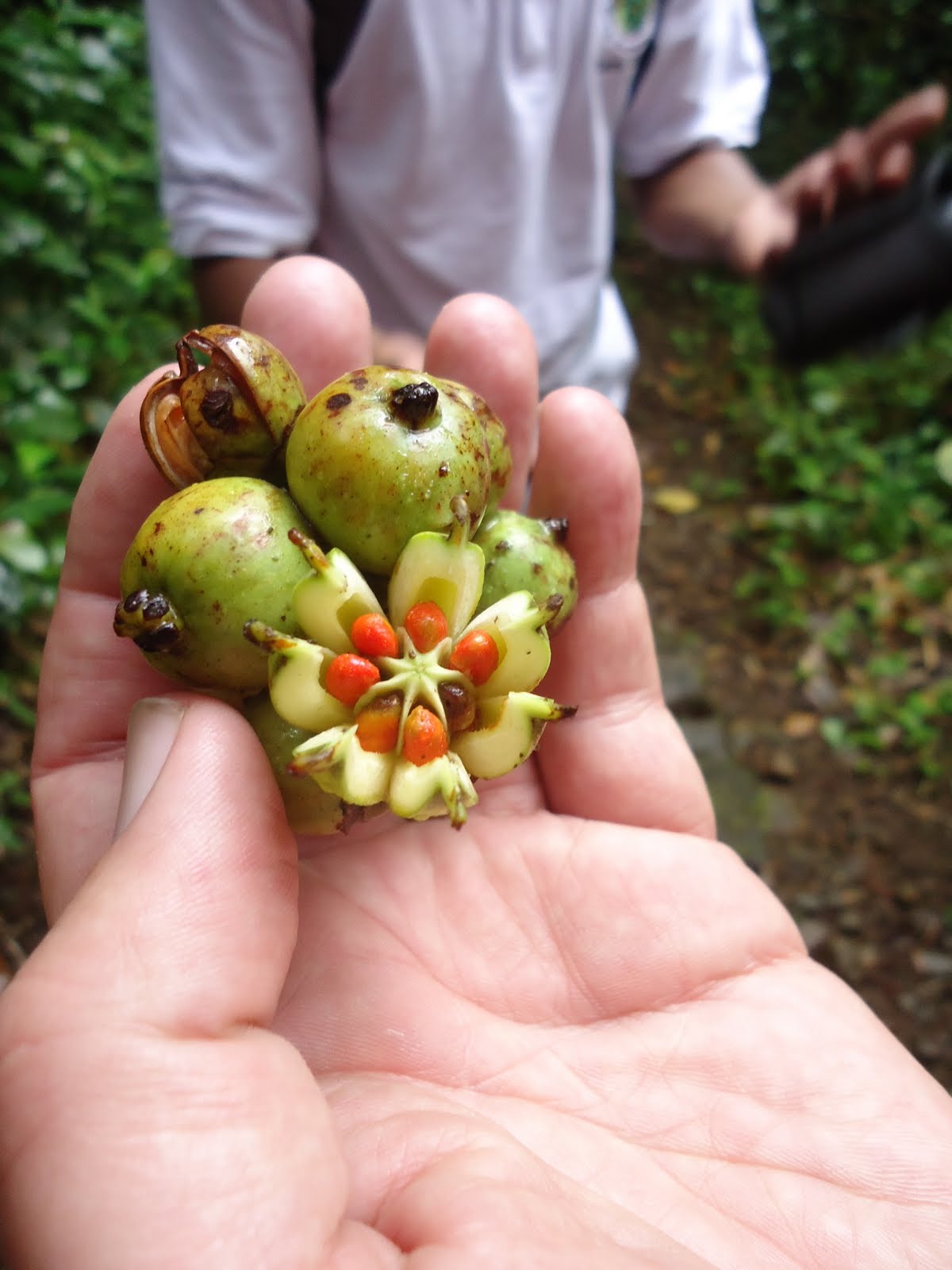


The starry fruit of Clusea sp. in Michael's big hand.


It was unfortunately not orchid season. Still we did see a few. And a lot of Epidendrum radicans. It covered a large open meadow high up on the volcano. It was so windy that day I asked our guide Eddie to hold it still while I took the picture.


Though ferns usually make me feel at home the unearthly size of these young tree ferns lets me know I am far from home. Eddie and Michael look on.


The cloud forest if a matrix of varying textures. The large oak like leaves are tobaco de monte(Telanthophora grandiflora), not a tobacco relative at all but a miniature sunflower.


The leaves of Capriote (Miconia laevigata).


Back in Granada there was no lack of plants though most were sequestered in inner court yards. Here the shadow of a royal palm (Roystonea regia), a native of Cuba, commonly found ass street trees.
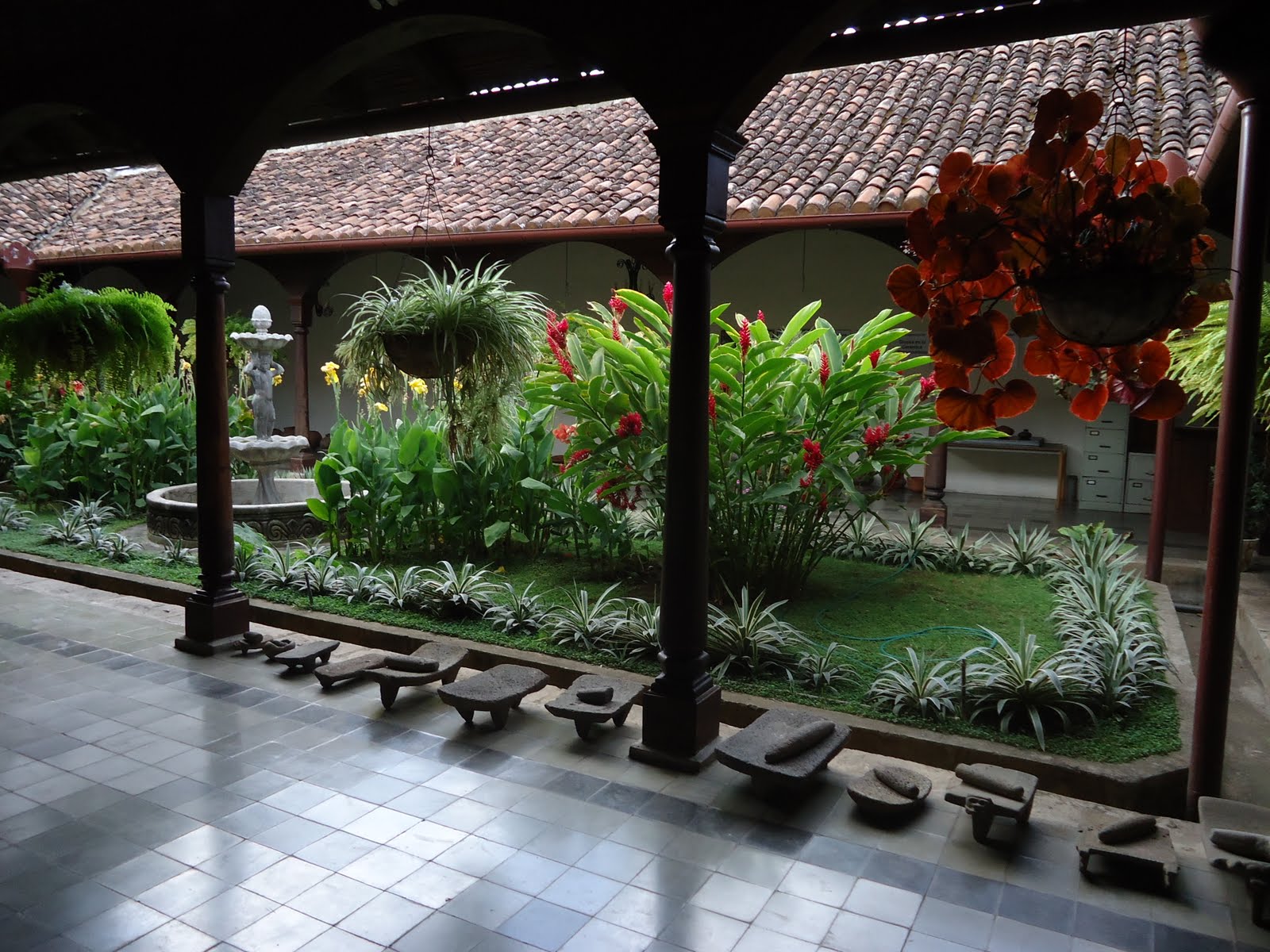


The inner court yards of the beautifulMi Museo, Granada's archelogical museum, were beautifully planted and a tranquil cool place to escape the city in the afternoon.


The inner court yard and open air restaurant of La Islita, where we stayed. How nice to here the screech of parrots and cacophony of grackles during breakfast.


Just behind our hotel the tourist zone ended. This over grown orchard, I'm not sure what kind of fruit trees these were though next door they grew cashews, was a great spot for bird watching in the early morning.


The symmetrical use of royal palms in the inner courtyard of Convento y Museo San Francisco amplified the contemplative beauty of the place and induced a sense of grandeur though the space was quite small. A tip to all gardeners:keep it simple.

And to all travelers: visit Nicaragua.

Saturday, April 2, 2011

Apologies

Years ago a chef friend of mine said you should never apologize for a meal your serving. “ It’s the worst seasoning,” she said. I’m sure I had just apologized for a meal I felt was over-salted, overcooked or just plain tasteless. My wise-chef-friend ate it anyway, relished it if I remember correctly; she had a great appetite. And the subject never came up again.
Until now. I wanted to start this post with an apology. My internal editor, consistently on, said “ wait a minute...” So I must pad my apologies with a few excuses for not having written more about Nicaragua. The country I was so fascinated by after visiting it in early March for the first time, that I ran to the library after returning, actually several libraries and the internet, to read all I could about the natural and human history of the country.
It’s flora and fauna is amazingly diverse. It’s history complicated by evil dictators, revolutions, counter-revolutions, earthquakes, embargoes and hurricanes. And hope. I found Nicaragua a happy place. Not just because I was happy to be in the sun and warmth in early March, when spirits in the Pacific Northwest were being doused with chilling rains. There was a simple everyday happiness there, maybe in comes from living where it’s sunny and warm all the time. Maybe it comes form having devastating earthquakes and evil dictators and revolutions behind . Suddenly ordinary everyday living is like a celebration. I’m not saying there weren’t complainers, we’re everywhere. We probably were kicked out of the garden of Eden for complaining about the taste of the forbidden fruit, not for picking it.
I had intended to write a series of posts on Nicaragua. And all I have are a bunch of excuses: there was a flood; there was a debilitating head cold; there were daffodils , making me forget about coconut palms, bananas and hibiscus. Shouldn’t I be writing about daffodils? You will be able to find plenty of blog posts on daffodils this time of year. It’s spring, they’re triumphant and nothing makes people crow louder than triumph.
Now that I am finally and firmly past the beginning of the post I can start apologizing. Firstly, I’d like to apologize to my readers who have been waiting since I promised “pretty pictures” of our trip way back on February 20th, nearly 2 months ago. I took over 1200 pictures on the trip. Mostly snap shots, though some could actually be called photographs. Thank God, for the digital camera; remember all those rolls of film?
As you know I love to take pictures of plants. “Plants, plants, plants!” my friends scream when I show then pictures from a trip. So I tried to be bold this time and include buildings. All the following pictures were taken on Little Corn Island. Though “in” Nicaragua, this tiny island is, geographically speaking, more part of the West Indies.


I am especially fond of these last 2 buildings. They look like something I could build. I also have a rustic hut fantasy. “ Ah, the simple life.” I must admit the barefoot inhabitants of these 2 building looked totally relaxed and happy. They were not rushing anywhere, or fussing. Maybe I misread them, but abject poverty looked very tempting when I thought of all my commitments and work back home.
It made me wonder what on earth our government was doing in the 80’s, and actually well before. Thwarting these peoples hopes of living in a more just society, in being able to own the land they worked, to have health care and education, doesn’t seem very democratic to me. It seemed like a huge cruelty and filled me with a million apologies every where I went. Luckily the Nicaraguans are governing themselves, not that I didn’t here complaining (what is democracy without complaining), but they're getting on. The many members of cooperatives that served us, from the cab drivers to the nature guides, to reforestation projects, all seemed very happy. And that made for a happy trip for us.
Oh. one last apology. I still haven’t posted any pictures of all the cool plants and gardens I saw. That will be coming next... And then on to daffodils.

Tuesday, March 22, 2011

MESSAGE IN A BOTTLE


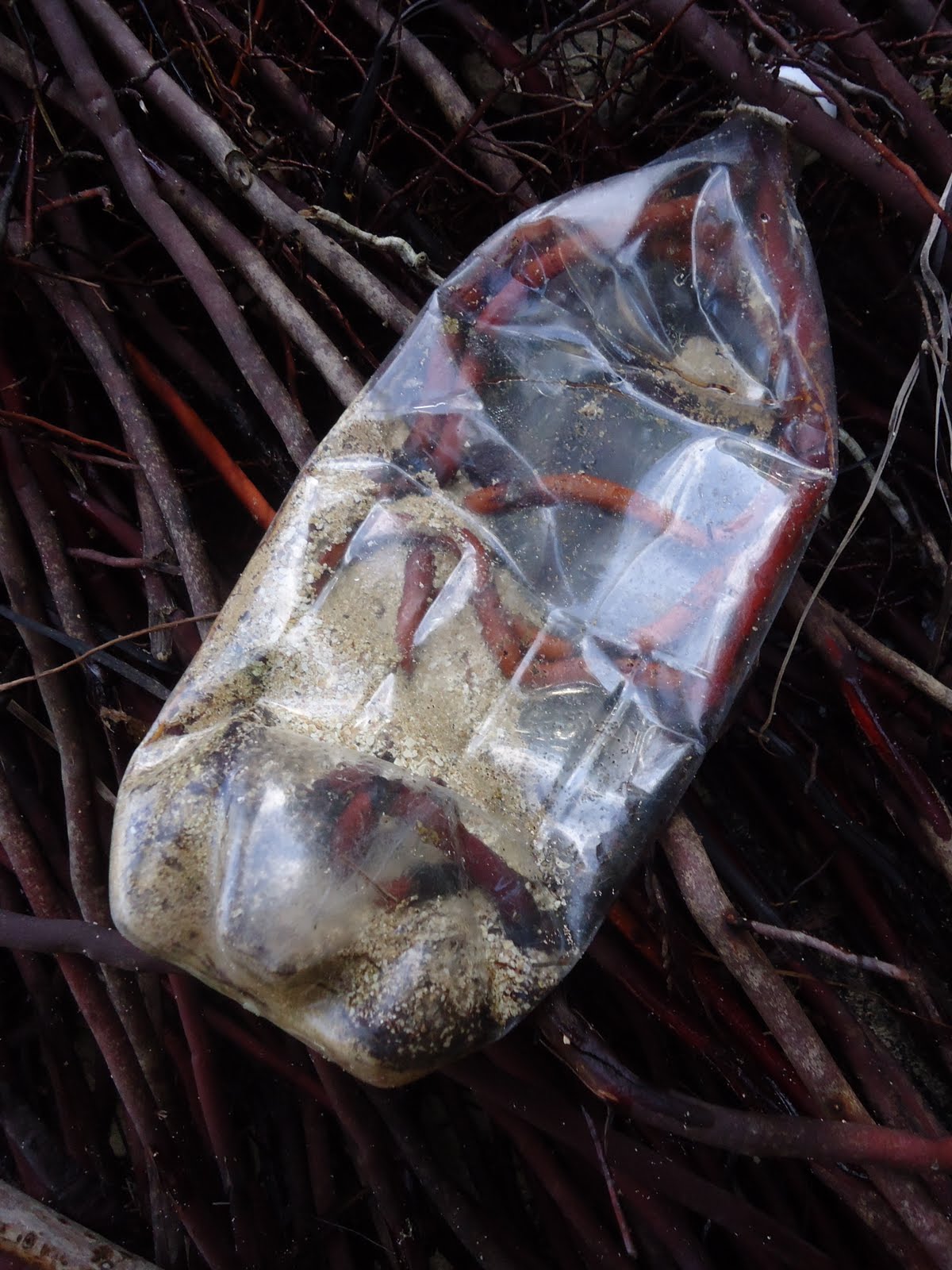
If you read my last blog you know how fond i've become of coconut palms, so when I saw this palm root wound up in a plastic bottled I had to laugh. But it was an ironic half sad laugh. There was plastic everywhere on the beaches of Little Corn Island. This island we ran off to to escape the world, had the world washing up on it's door step everyday.


I only then found out that Caribbean cruise lines can dump their garbage in the open ocean. And anything that floats is a gift to the beaches so popular with tourists, like us.

And that there is also a plastic island, by some estimates the size of the U.S., another amusingly sad irony, that floats in the Pacific Ocean.


I have a collagist eye for garbage. I used to collect it excessively when I had a studio. I see stories in lost things. Like this forlorn ball.


Little Corn Island is a poor island; they don't have recycle bins, or even garbage men or a dump. From the smell of it on somedays I imagine all they can do with non-organic garbage is burn it. And with the thousands of tourists generating garbage on the island over the years you can see the mounting problem. Where we stayed the water was fine to drink we never had to buy a plastic bottle of anything. Okay, we had a coke once. I was flummoxed as I searched for a recycle bin. It was another sad irony to a North Westerner who is so habituated to recycling everything that I couldn't even find a garbage can. Some one on the island who calls her business Little Corn Island Trashures has found one way to mine the beaches tide lines for profit but sorely it did little to slow the daily onslaught of plastic.


Some islanders are very concerned about the build up of garbage spoiling their home and livelihood. Some beaches especially in front of the busier encampments are cleaned of trash. Unfortunately that leaves the large wild beaches covered with plastic along with the more natural debris, which I guess is the nature of a beach anyway. I have been grateful since my return for the urban industrial complex that sucks up all the plastic I buy and reuses it. Still I'm really thinking about plastic since I came back. How much I buy and reuse and recycle, and throw away.

I hope you will, too.

Saturday, March 19, 2011

COCONUTS


As a writer I am always looking for something to write about. Something unique, extraordinary, important. I often overlook the obvious and ubiquitous.


When Michael and I arrived on Little Corn Island on the Caribbean side of Nicaragua, we were not the only travelers there. There were Canadians and Italians, one French woman and some permanent residents from Holland and Sweden. Oh, and coconuts. Though nearly every tropical beach worldwide seems to be graced with coconuts (Cocos nucifera), they are relative new comers to the shores of the New World. They were brought here by the Spanish and Portuguese from the South Pacific where they had been cultivated and spread for over 3000 years from their original, if only speculative, home of Malaysia.


Now I am not much of a beach bum. I burn too easily for one thing and I’m way to curious for another. So as soon as we settled into our little cabana at Farm Peace & Love I headed into the jungle clad interior of this tiny island to see what I could find. The canopy was primarily mango trees (Mangifera indica) native to India, breadfruit (Atrocarpus altilis) another South East Asian native and Indian almond (Terminalia catapa) I was beginning to wonder what might be native here. Even the under-story thick with bananas (Musa acuminata), cannas (Canna edulis) and pineapples (Ananas comosus) was manmade. This unruly jungle as it turned out was a great big garden. An Eden even.
When we disembarked I heard someone say, “ Welcome to paradise”. He most certainly was standing under a coconut palm. They were everywhere at the single dock that served as the port to the island. There were coconuts everywhere. Their propensity for sandy soils, their shallow roots like lots of air, has made them the iconic beach plant. Iconic to the point of being trite. No desert island cartoon is without it’s coconut palm. No sunset postcard from Hawaii with out a palm’s silhouette.
Since we were only 5 days into our two week stay on this very small island, only 1.1 square miles, and I was getting lazier by the hour, I cut my hikes into the jungle down. And began to stare at the palms. It was easier from my towel in the sand, or the hammock on the porch of our cabana. I realized how much I took then for granted, almost hated them for there idle presence. Though they rattled in the wind with gusto on some days, they had a benign sort of easiness to them that was what we came here for. A rest.


A few mornings later, I had to contemplate my intent in the spa like heat and humidity for a few days, I thought I’d give the coconut palms a closer look. I got out my point-and-shoot camera and avoiding the leaning palm tree icon for high light beach shots, fiddled with the manual settings and moved in on the palms. They were lichen splattered, twisted, decaying and emerging. What I saw first as a pole with a mop on top had an elegant architecture and a vitality. They can be crowned with over 30 leaves and in the process they drop one leave a month and create a new one, with leaves that can reach up to 6 meters this is no lazy plant.


Though my little camera helped me look closely at the mighty coconut palm, it became like taking a picture of my freckled sunburnt knee and saying it was a self portrait. So the next day I pulled out my sketch book and pencils. There is something about drawing from life that really gets you to see. I wanted to see the palms.
Getting a rough cartoon of a palm was trouble enough, my skills as a draftsman are sorely rusty. But my eye is still strong and I absorbed information like a sponge. It was hard to capture the disheveled architecture of the palms. The raggedy motility. The crisscrossed shagginess was exuberant, joyous as each palm lifted it’s giant pre-shred leaves as a sacrifice to the wind in order to capture the sun.
Now I know I should have been spacing out looking at the aqua waters, napping, lolling in the warm waves, but I couldn’t help but get more and more fascinated with the palms. To think I had over looked them as trite icons of the tropical vacation just a week earlier and now they were becoming dynamic living beings.
In many cultures they are called the tree of life. They have become integral to coastal tropical life. From thatching to glycerine for explosives they are in all ways useful. And delicious, we ate cocos bread every morning baked by our hosts and drank coconut water right from the shell, prying and nibbling the tender white flesh as we half-snoozed under the palms, the grit of sand between our toes, in our ears and in our mouths . I was getting to see why this tree was so icon of the pleasures of tropical life, tropical vacation. And beginning to enjoy it.


The name 'coco' comes from the Spanish meaning “goblin”. Certainly their little 3 eyed faces remind one of monkeys or even more mischievous beings. Michael always sited us just out of reach of the falling nuts; they can be lethal. One night when they fell during a storm it was like being bombed. The leaves crashed thunderously too. As a gardener I speculated on the size of rake one might need to clean up the mess, of the slow, even in the heat and humidity, decomposition of the leaves and husks. The downed leaves became barricades around homes. The nuts germinate everywhere. Coconuts are easy to grow from seed, thought they need a lot of room until they can be “limbed-up”. They also produce their first crop of nuts only 4 years after germination. Not at all an indication of laziness.


Now that I am home writing this at our kitchen table looking out at the cherry orchard with it’s buds just beginning to swell, the orchards of coconut palms seem like a dream. The heat, too, a dream. Had we actually gone? I turned one of my palm photos into a screen saver. It’s iconic of the well being I felt resting on a tropical beach. I’m setting a goal by looking at it every day and imagining returning to a coconut lined beach next year.


At least in my dreams.